RADAR — risk-aware automated response
RRCF-based behavioral and signature detection, now built around a manager-centric architecture with a programmatic wazuh_api module. Tiered active responses scale automatically to computed risk level.
RRCF
wazuh_api
Active response
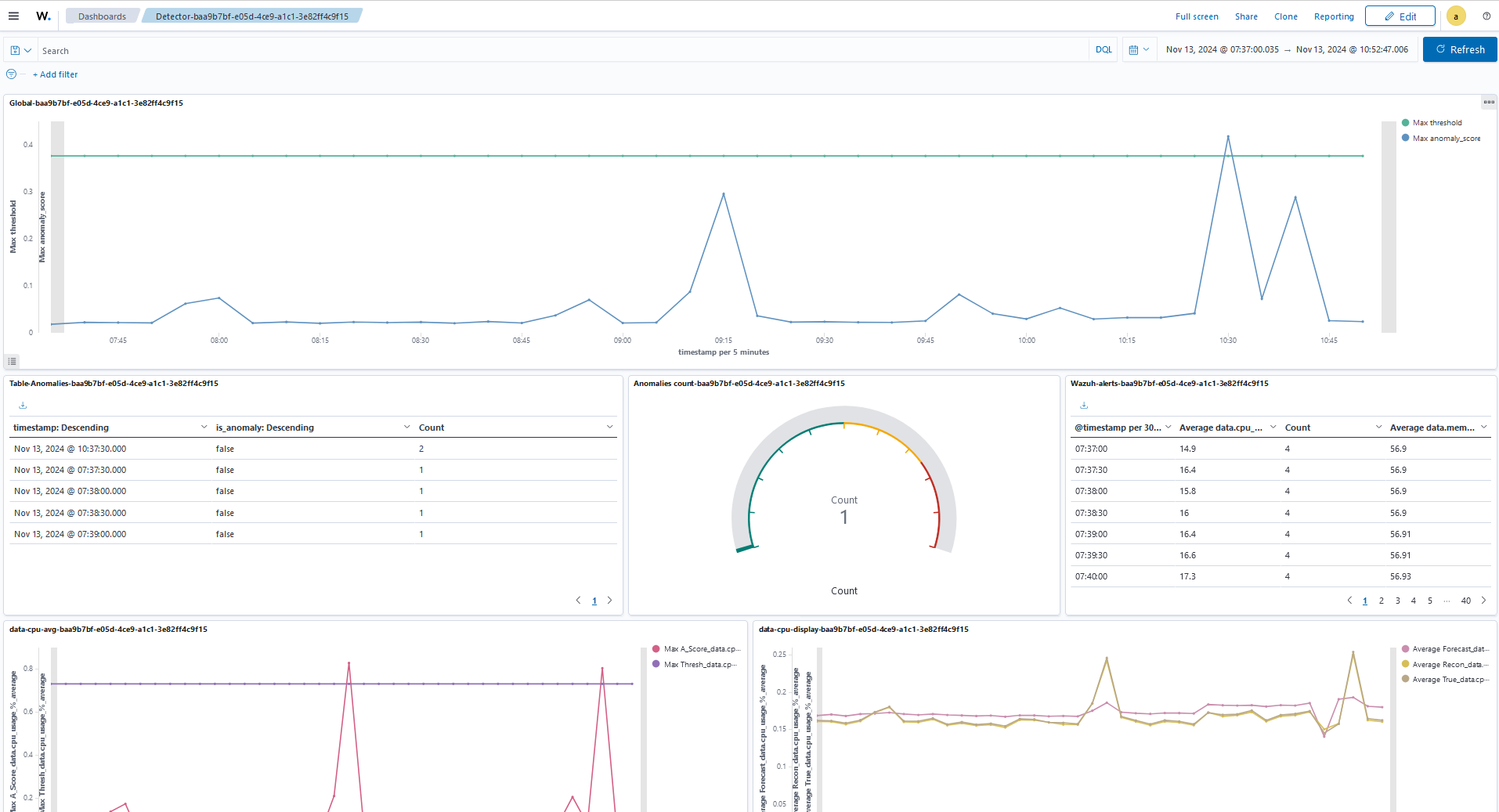
SONAR — multivariate anomaly detection
Microsoft MTAD-GAT multivariate time-series anomaly detection on Wazuh alerts. Scenario-driven YAML configuration, offline debug mode, and direct RADAR data shipping in Wazuh.
Microsoft MTAD-GAT
YAML scenarios
Debug mode
Hybrid detection engine
Three-layer defense in depth: Wazuh/Suricata signature rules catch known patterns, RADAR (RRCF) detects behavioral anomalies, and SONAR (MTAD-GAT) identifies multivariate ML anomalies.
Wazuh
Suricata
Defense-in-depth
CTI enrichment via DECIPHER
SATRAP-DL's DECIPHER subsystem queries MISP IOC feeds for blacklisted IPs, malicious domains, and hash indicators. The resulting CTI score T is fused into the normalized risk score R.
DECIPHER
SATRAP-DL
MISP
Flowintel case management
Incident cases are created automatically by DECIPHER in Flowintel when risk thresholds are crossed. Alert emails include the case URL, risk score breakdown, and full IOC context.
Flowintel
Case creation
Tiered alerts
Manager-centric enrichment & deployment
Enrichment logic (GeoIP, web) now lives in the Wazuh manager instead of per-endpoint helpers. Onboarding, group assignment, enrollment hardening, and scenario teardown are all driven by scripted manager entrypoints (radar.sh, bootstrap-agent.sh) — no Ansible required.
manager-enrichment
bootstrap-agent.sh
Docker
RADAR GUI — web-based SOAR control panel
Browser-based Flask interface for the full RADAR operational lifecycle: configure connectors, tune risk weights and tier thresholds per scenario, and drive the Deployment page's Scenario Management, Anomaly Detector, Agent Management, Group Management, Status, and Teardown tabs — each deploy action paired with a matching undo action.
Flask
Undo actions
Real-time streaming